
Learning Hub
When Should You Start Brushing Your Baby’s Teeth?
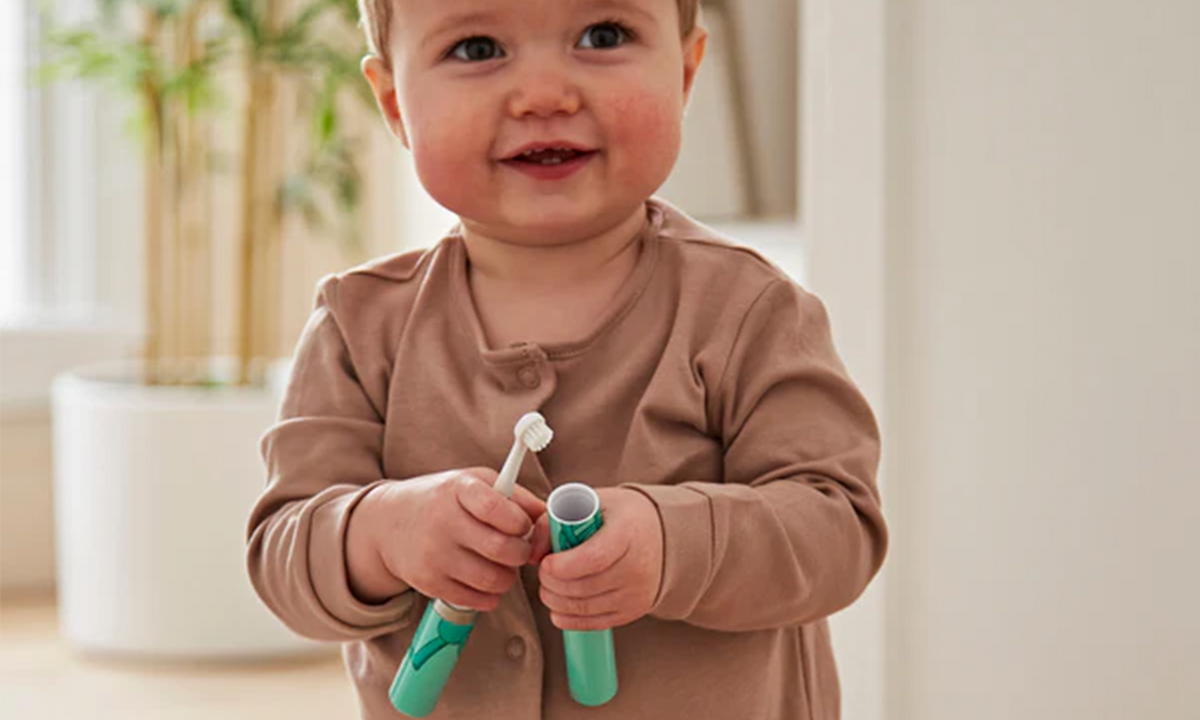
“My baby only has one tooth. Do I really need to brush it?”
“When should I start using toothpaste?”
“My baby just bites the toothbrush. Is that normal?”
If you're asking these questions, you're in good company.
Many parents assume brushing can wait until their child has a mouth full of teeth.
In reality, healthy oral care starts much earlier than many people realise.
Establishing good habits from the beginning doesn't just help care for your baby's teeth. It also helps them become comfortable with brushing as part of everyday life.
This guide explains when to start cleaning your baby's mouth, how brushing changes as they grow and practical ways to make it a positive experience for everyone.
New to oral development?
Read our complete guide to understand how brushing fits into your baby's overall teething and oral development journey.
General information only
This article provides general parenting information and does not replace personalised advice from a dentist, GP, pharmacist, maternal and child health nurse or other qualified healthcare professional.
Why Baby Teeth Matter More Than Many Parents Think
Baby teeth are temporary, but they're incredibly important.
They help your child:
- chew and enjoy a wide variety of foods
- develop clear speech
- guide adult teeth into position
- support healthy jaw development
- build confidence as they smile and grow
Looking after baby teeth from the beginning also helps establish habits that can continue well beyond childhood.
Oral development insight
Healthy oral care isn't only about cleaning teeth.
It's also about creating a calm, positive and predictable daily routine.
Babies who become familiar with brushing from an early age may be more likely to see it as a normal part of their day rather than something unfamiliar introduced later.
Before the First Tooth: Should You Clean Your Baby's Gums?
Before teeth appear, there is no need to use a traditional toothbrush.
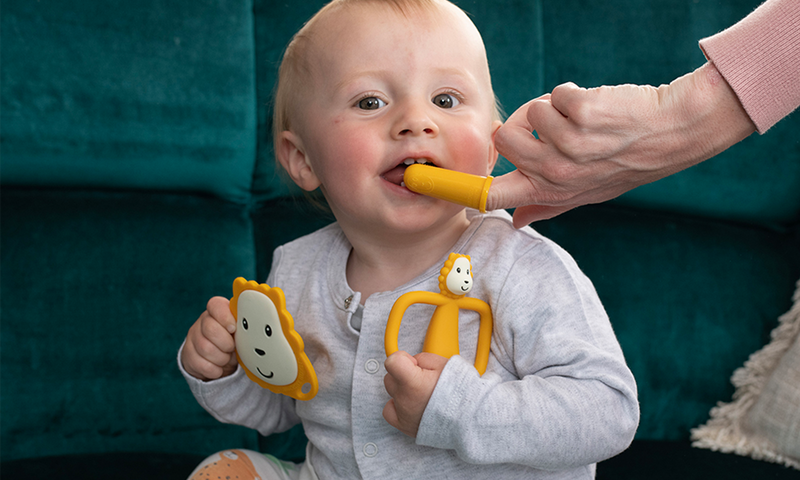
You can gently clean your baby's gums using a clean, moist gauze pad or a soft, damp washcloth.
Wrap the cloth around a clean finger and gently wipe along the gums.
The goal isn't to scrub.
It's simply to introduce gentle mouth care in a calm and positive way.
When Should You Start Brushing?
As soon as your baby's first tooth appears, it's time to introduce a soft baby toothbrush.
That first tooth may seem tiny, but it still benefits from regular gentle cleaning.
Waiting until several teeth appear may make it more difficult to establish the routine.
Starting early means brushing can become a familiar part of your baby's morning and evening.
Choosing Your Baby's First Toothbrush
Not all toothbrushes are designed for tiny mouths.
A suitable first toothbrush should have:
- extra-soft bristles
- a small brush head
- an easy-to-hold handle for parents
- a design appropriate for your baby's age
As babies grow, many enjoy holding a toothbrush themselves while a parent completes the brushing.
This isn't about independent brushing yet. It's about helping brushing feel familiar and positive.
What About Toothpaste?
For babies up to 17 months old, current Australian guidance generally recommends brushing with a soft toothbrush and water only.
Toothpaste should only be introduced earlier if your child's dentist recommends it because of an increased risk of tooth decay.
From 18 months to five years, children can generally use a small pea-sized amount of low-fluoride toothpaste twice a day.
Encourage your child to spit out the toothpaste and avoid swallowing, rinsing, licking or eating it.
If you're unsure what is appropriate for your child, ask your dentist, GP or maternal and child health nurse for personalised advice.
How to Brush Your Baby's Teeth
Brushing doesn't need to feel complicated.
A gentle, consistent routine is usually the best place to start.
Step 1: Choose a secure and comfortable position
Some parents find it easiest to brush with their baby lying across their lap, while others prefer sitting or standing together in front of a mirror.
Step 2: Use gentle movements
Use small, gentle movements rather than scrubbing.
Step 3: Clean all visible tooth surfaces
Brush the front, back and chewing surfaces of every visible tooth, even if your baby only has one tooth.
Step 4: Keep the experience positive
Smile, talk or sing while you brush. A calm and predictable experience can help your baby become more comfortable with the routine.
Oral development insight
Babies learn through repetition.
They may not immediately understand why brushing happens, but they can learn that it's another predictable part of the day, just like bath time or getting dressed.
Consistency builds familiarity, and familiarity may help reduce resistance.
My Baby Just Chews the Toothbrush
That's completely normal.
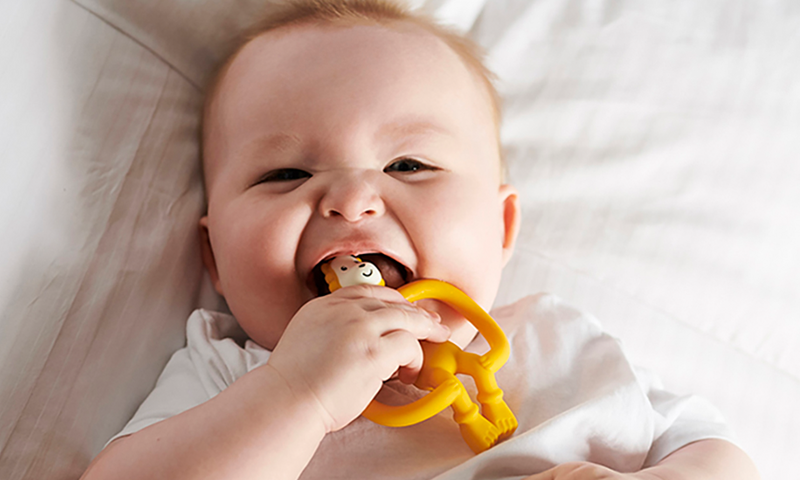
Chewing and mouthing are common parts of early oral exploration. Learn more in Why Do Babies Chew Everything?
Many babies don't understand brushing at first.
Instead, they may:
- chew the brush
- suck on the bristles
- play with the handle
- try to grab it from you
This doesn't mean brushing has failed.
It's part of how babies explore and become comfortable with a new object.
You can let your baby briefly hold or explore the toothbrush, but an adult should still complete the brushing.
Five Common Brushing Mistakes Parents Make
1. Waiting too long to start
The earlier brushing becomes part of everyday life, the more familiar it can feel.
2. Trying to rush through brushing
A calm and consistent experience is more helpful than trying to force a perfect brushing session.
3. Only brushing before bed
A morning and evening routine helps reinforce the habit and provides regular cleaning.
4. Expecting perfect cooperation
Most babies don't cooperate perfectly from the beginning.
Like any new routine, brushing takes time and repetition.
5. Giving up after a difficult day
Consistency matters more than perfection.
If brushing doesn't go exactly to plan, calmly try again at the next scheduled brushing time.
How Oral Care Changes as Your Baby Grows
Around 6–12 months
Your baby may only have one or two teeth.
The focus is introducing gentle brushing and building familiarity.
Around 12–18 months
More front teeth may appear, and babies often become more interested in copying what adults do.
Brushing together as a family can help make the routine feel more familiar.
Around 18–24 months
Molars may begin appearing.
These larger teeth require cleaning too, even though they can be more difficult to reach.
Toddlers also become more independent at this stage, making calm and consistent routines particularly useful.
Making Brushing Easier Every Day
Parents often ask how they can reduce resistance.
Simple ideas include:
- letting your baby hold a second toothbrush
- brushing your own teeth at the same time
- singing the same short song each time
- using calm, positive encouragement
- keeping the routine short and predictable
The goal isn't to create a perfect experience every single time.
It's to create repeated positive experiences that support healthy long-term habits.
When Should Your Child Visit the Dentist?
Arrange your child's first dental visit when their first tooth appears or by their first birthday, whichever comes first.
Early visits allow parents to ask questions about:
- brushing and toothpaste
- eating and drinking habits
- teething
- dummy use
- thumb sucking
- oral development
They also give children an opportunity to become familiar with the dental environment before treatment is needed.
Frequently Asked Questions
Do I really need to brush one tiny tooth?
Yes. Begin brushing with a soft baby toothbrush as soon as the first tooth appears. It helps clean the tooth and establish the routine early.
What if my baby hates brushing?
This is common. Stay calm, keep the routine short and positive, and continue providing regular opportunities to practise.
Should my baby brush independently?
No. Young children still need an adult to brush their teeth effectively. Letting your baby hold the toothbrush can help them become familiar with it, but an adult should complete the brushing.
Is chewing the toothbrush okay?
Chewing and exploring the toothbrush is common when babies are becoming familiar with it. Supervise your baby and regularly check the toothbrush for worn or damaged bristles.
Do I still need to brush if my baby doesn't eat much solid food?
Yes. Once the first tooth appears, regular brushing is important for cleaning the tooth and building a healthy daily oral care routine.
When should my baby start using toothpaste?
Current Australian guidance generally recommends water only up to 17 months. From 18 months, a small pea-sized amount of low-fluoride toothpaste can generally be used unless your dentist recommends otherwise.
Healthy Habits Start Earlier Than You Think
Brushing your baby's teeth isn't simply another task on the daily to-do list.
It's one of the simplest ways to support long-term oral health while helping your child develop confidence and familiarity with dental care.
Starting from the first tooth means your child grows up seeing brushing as a normal part of everyday life rather than something suddenly introduced later.
Like many parenting milestones, consistency matters more than perfection.
Every gentle brush, positive interaction and repeated daily routine helps build the foundation for healthy smiles in the years ahead.
Continue Reading
Baby Teething, First Teeth & Oral Development
Read the complete Australian guide covering teething signs, first teeth, brushing and oral development.
Read the complete teething and oral development guide
How to Choose the Best Teether for Your Baby
Compare grip, texture, material and design features for different teething stages.
Read the baby teether buying guide
Baby Teething Stages Explained: What to Expect Month by Month
Follow the common stages of teething from early chewing through to the arrival of the final baby molars.
Read the month-by-month teething guide
Why Do Babies Chew Everything?
Understand the difference between mouthing and teething, and learn how to safely support your baby's natural chewing stage.
Read the baby mouthing and chewing guide
Recommended Matchstick Monkey Products
Matchstick Monkey Baby Toothbrush Range
Explore soft baby toothbrushes designed to help families introduce gentle brushing and positive oral care routines.
Shop Matchstick Monkey Baby Toothbrushes
Matchstick Monkey Starter and Bundle Sets
Explore convenient sets that combine Matchstick Monkey teething and early oral care essentials.
Shop Matchstick Monkey Bundle Sets
Matchstick Monkey Original Teethers
Explore easy-grip silicone teethers with multiple textured surfaces for different chewing preferences.
Shop Matchstick Monkey Original Teethers