
Learning Hub
Baby Teething Stages Explained: What to Expect Month by Month
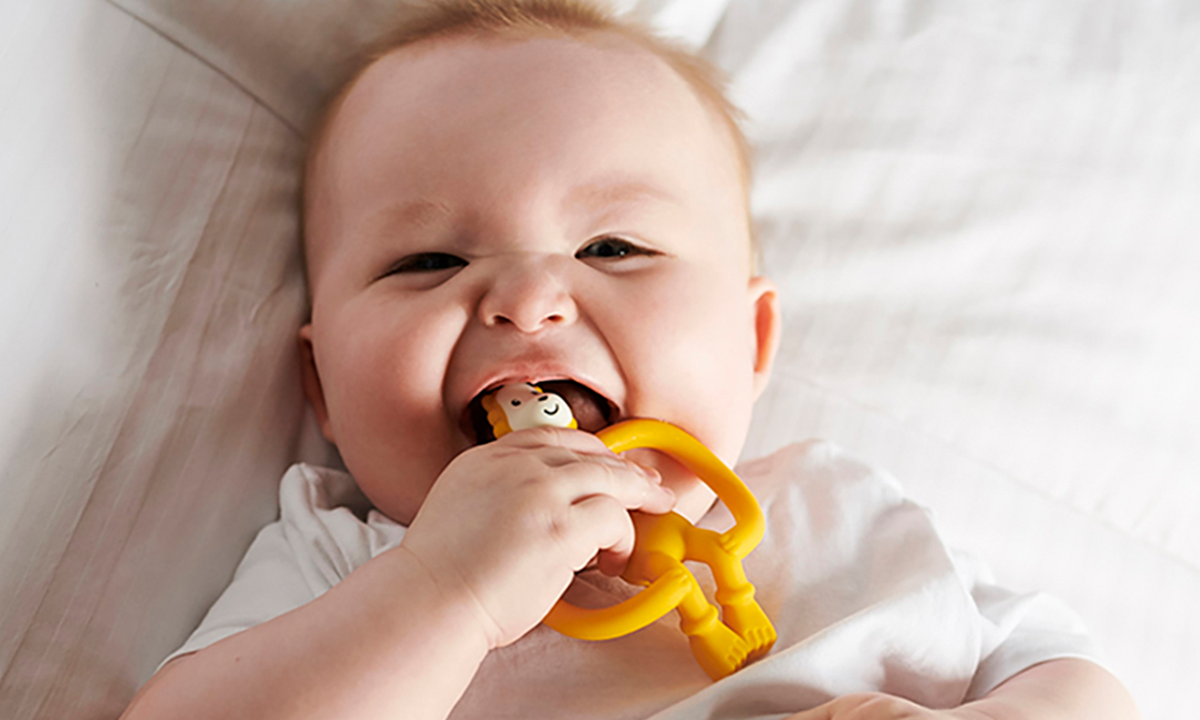
“My four-month-old is chewing everything, but there’s no tooth.”
“My friend’s baby already has six teeth. Mine has none.”
“Is this normal, or should I be worried?”
If you've ever compared your baby's teething journey with someone else's, you're certainly not alone.
One of the biggest misconceptions about teething is that every baby follows the same timeline.
They don't.
Some babies cut their first tooth at four months, while others don't see one until after their first birthday. Both can be within the wide range of normal development.
The key is understanding what's happening inside your baby's mouth at each stage, rather than focusing only on when each tooth appears.
In this guide, we'll explain what commonly happens from birth through to age two, the signs to look for and how you can support your baby at each stage.
Looking for the complete picture?
Read our complete guide to oral development from birth through to toddlerhood.
General information only
This article provides general parenting information and does not replace personalised advice from a GP, dentist, pharmacist, maternal and child health nurse or other qualified healthcare professional.
Before We Start: Every Baby Develops at Their Own Pace
Growth charts are useful.
Developmental milestones are helpful.
But babies don't read the rulebook.
While there are average ages for teething, a difference of several months either side of those averages can be normal.
Instead of asking:
“Should my baby have teeth by now?”
Consider the bigger picture of your baby's overall growth and development.
If you have concerns about delayed tooth eruption or your baby's oral development, speak with your maternal and child health nurse, GP or dentist.
Birth to 3 Months: Building the Foundations
Although there are usually no visible teeth yet, a lot is happening beneath the surface.
Your baby's primary teeth began developing before birth. During these first few months, the jaw, gums and facial muscles continue developing while your baby learns important feeding skills.
You might notice:
- frequent sucking
- rooting reflexes
- hands moving towards the mouth
- early oral exploration
At this stage, babies are already discovering and exploring their mouths, even though teething may not yet have started.
Oral development insight
Your baby's mouth is one of the first ways they explore the world.
Putting hands and suitable toys into the mouth helps babies explore texture, pressure and movement while practising coordinated mouth movements.
3–6 Months: The Early Teething Stage
This is often when parents first suspect teething.
Even if no teeth are visible, babies commonly begin looking for extra pressure against their gums.
Common behaviours can include:
- chewing fingers
- chewing toys
- increased drooling
- rubbing gums
- wanting to bite during feeds
- being slightly fussier than usual
These behaviours don't necessarily mean that a tooth will appear immediately.
Some babies remain in this early chewing stage for weeks or months before their first tooth erupts.
Chewing does not always mean a tooth is about to appear. Learn more about normal mouthing and oral exploration in Why Do Babies Chew Everything?
How to support your baby:
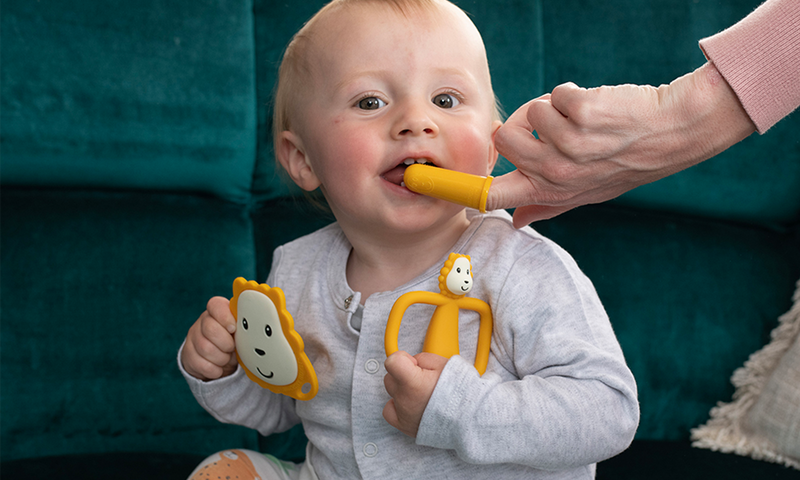
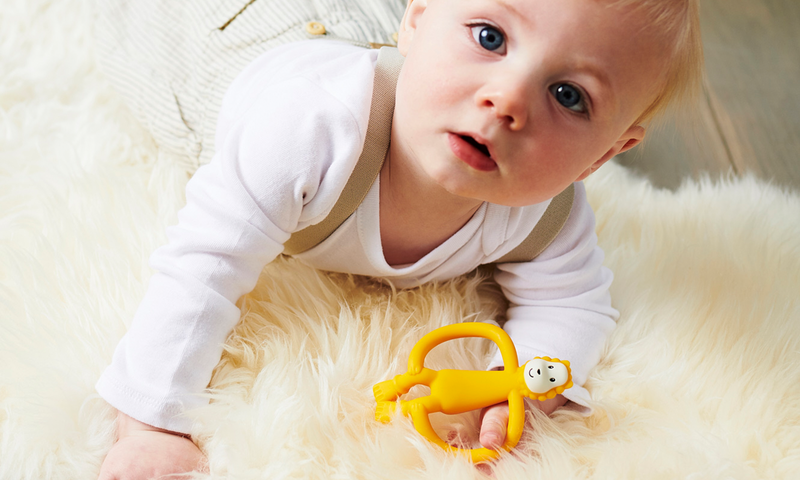
- offer age-appropriate silicone teethers
- allow supervised oral exploration
- provide extra comfort and reassurance
- use a cool, not frozen, teether if permitted by the manufacturer's instructions
Need help choosing one? Read our guide to choosing the best teether for your baby.
6–10 Months: The First Tooth Appears
For many babies, this is when the first tooth becomes visible.
The lower front teeth, known as the lower central incisors, are commonly among the first to appear.
Parents may notice:
- increased chewing
- swollen or tender gums
- temporarily disrupted sleep
- wanting to chew firmer surfaces
Then, sometimes quite suddenly, a tiny white edge appears.
Oral development insight
Teething begins before a tooth becomes visible. A tooth gradually moves towards and through the gum before its edge can be seen.
8–12 Months: More Front Teeth Arrive
After the first lower teeth, the upper front teeth commonly follow.
You may notice:
- more confident biting
- increased interest in suitable finger foods
- more chewing during meals
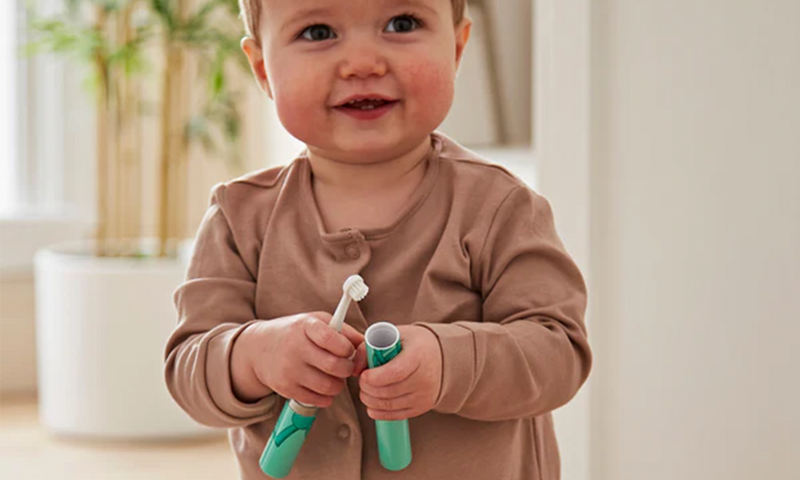
- curiosity about holding a toothbrush
Once the first tooth appears, begin making gentle toothbrushing part of your baby's daily routine.
For guidance on toothbrushes, toothpaste and building a positive routine, read When Should You Start Brushing Your Baby's Teeth?
9–16 Months: Side Teeth Join the Party
The lateral incisors commonly begin appearing during this period.
By now, your baby may seem much more experienced with teething.
You might notice:
- chewing concentrated on one side
- brief periods of fussiness
- wanting different textures to chew
Some babies begin rejecting teethers they previously enjoyed.
This doesn't necessarily mean they've gone off teethers altogether. As different teeth emerge, babies may seek pressure in different areas of the mouth.
13–19 Months: The First Molars
Molars are broader than the front teeth.
As they move through the gums, toddlers may seek chewing pressure further back in the mouth.
Parents may notice:
- chewing on the back corners of suitable toys
- biting with more pressure
- temporarily disrupted sleep
- wanting firmer chewing surfaces
A teether designed with suitable longer chewing surfaces may be useful during this stage, provided it is appropriate for your child's age and used according to its instructions.
Oral development insight
Because molars are wider than incisors, their eruption involves a larger area of gum tissue. Some families find this stage more noticeable than the arrival of the front teeth.
16–23 Months: Canines
Canines, sometimes called eye teeth, commonly arrive after the first molars.
Some children barely seem to notice them.
Others may want extra comfort for a few days.
Continue offering:
- familiar comfort routines
- safe opportunities for chewing
- consistent toothbrushing
23–33 Months: The Final Baby Molars
The second molars are usually among the final baby teeth to erupt.
By around age three, most children have all 20 primary teeth.
At this stage, your toddler may be:
- eating a much wider variety of foods
- continuing to develop clearer speech
- learning lifelong oral hygiene habits
The teething journey may be coming to an end, but healthy oral care is only just beginning.
Baby Teeth Timeline at a Glance
| Tooth | Typical Age |
|---|---|
| Lower central incisors | 6–10 months |
| Upper central incisors | 8–12 months |
| Upper lateral incisors | 9–13 months |
| Lower lateral incisors | 10–16 months |
| First molars | 13–19 months |
| Canines | 16–23 months |
| Second molars | 23–33 months |
Remember, this is a general guide rather than a deadline.
How Your Baby's Needs Change Throughout Teething
One mistake parents can make is assuming that the same teether will suit every teething stage.
In reality, your baby's preferences may change as different teeth emerge.
| Stage | What Your Baby May Prefer |
|---|---|
| Early chewing | A lightweight, easy-to-hold teether |
| Front teeth | Slim, textured chewing surfaces |
| Side teeth | Multiple textures and grip positions |
| Molars | A design intended to reach further areas of the mouth safely |
Understanding these changing preferences can make teething feel less frustrating for both you and your baby.
When Should You Be Concerned?
Most differences in teething timelines are normal.
Speak with a qualified healthcare professional if:
- your baby seems unusually distressed for an extended period
- you're worried about feeding or growth
- you notice significant swelling, bleeding or injury inside the mouth
- your child has no teeth well beyond the usual range and you're concerned about their overall development
Teething should not be used to explain a fever, persistent diarrhoea, vomiting, breathing difficulty, lethargy or other signs of illness.
A temperature of 38°C or higher is a fever and should not be attributed to teething.
Five Teething Myths Worth Busting
“Every baby gets their first tooth at six months.”
False. There is a wide range of normal tooth eruption times.
“Drooling always means teething.”
Not necessarily. Babies also drool and mouth objects as part of normal oral development.
“Teething causes fever.”
False. Teething does not cause a fever. If your baby has a temperature of 38°C or higher, do not assume that teething is responsible.
“If one tooth is through, the hard part is over.”
Teething happens in stages over the first few years of childhood.
“Every baby experiences teething the same way.”
Definitely not. Some babies seem relatively unbothered, while others may need extra comfort during different stages.
Supporting Your Baby Through Every Stage
Teething isn't a single event.
It's a gradual journey that unfolds over the first few years of life.
Understanding what commonly happens month by month can help you recognise changes, respond with confidence and choose suitable support as your baby's needs evolve.
Whether your baby is just starting to chew their hands or proudly showing off a new tooth, every stage is another step in their oral development.
Continue Reading
Baby Teething, First Teeth & Oral Development
Read the complete Australian guide covering teething signs, first teeth, brushing and oral development.
Read the complete teething and oral development guide
How to Choose the Best Teether for Your Baby
Compare grip, texture, material and design features for different teething stages.
Read the baby teether buying guide
When Should You Start Brushing Your Baby's Teeth?
Learn when to start brushing, what toothbrush and toothpaste to use, and how to establish a positive daily routine.
Read the baby toothbrushing guide
Why Do Babies Chew Everything?
Understand the difference between mouthing and teething, and learn how to safely support your baby's natural chewing stage.
Read the baby mouthing and chewing guide
Recommended Matchstick Monkey Products
Matchstick Monkey Original Teethers
Explore easy-grip silicone teethers with multiple textured surfaces for different chewing preferences.
Shop Matchstick Monkey Original Teethers
Matchstick Monkey Animal Teethers
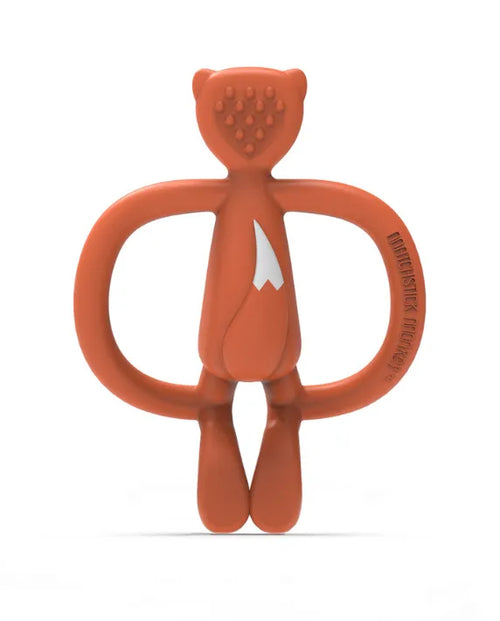
Discover playful animal-shaped teethers designed for little hands and everyday chewing.
Shop Matchstick Monkey Animal Teethers
Matchstick Monkey Baby Toothbrush Range
Explore baby toothbrushes designed to help families introduce gentle brushing and positive oral care routines.
Shop Matchstick Monkey Baby Toothbrushes